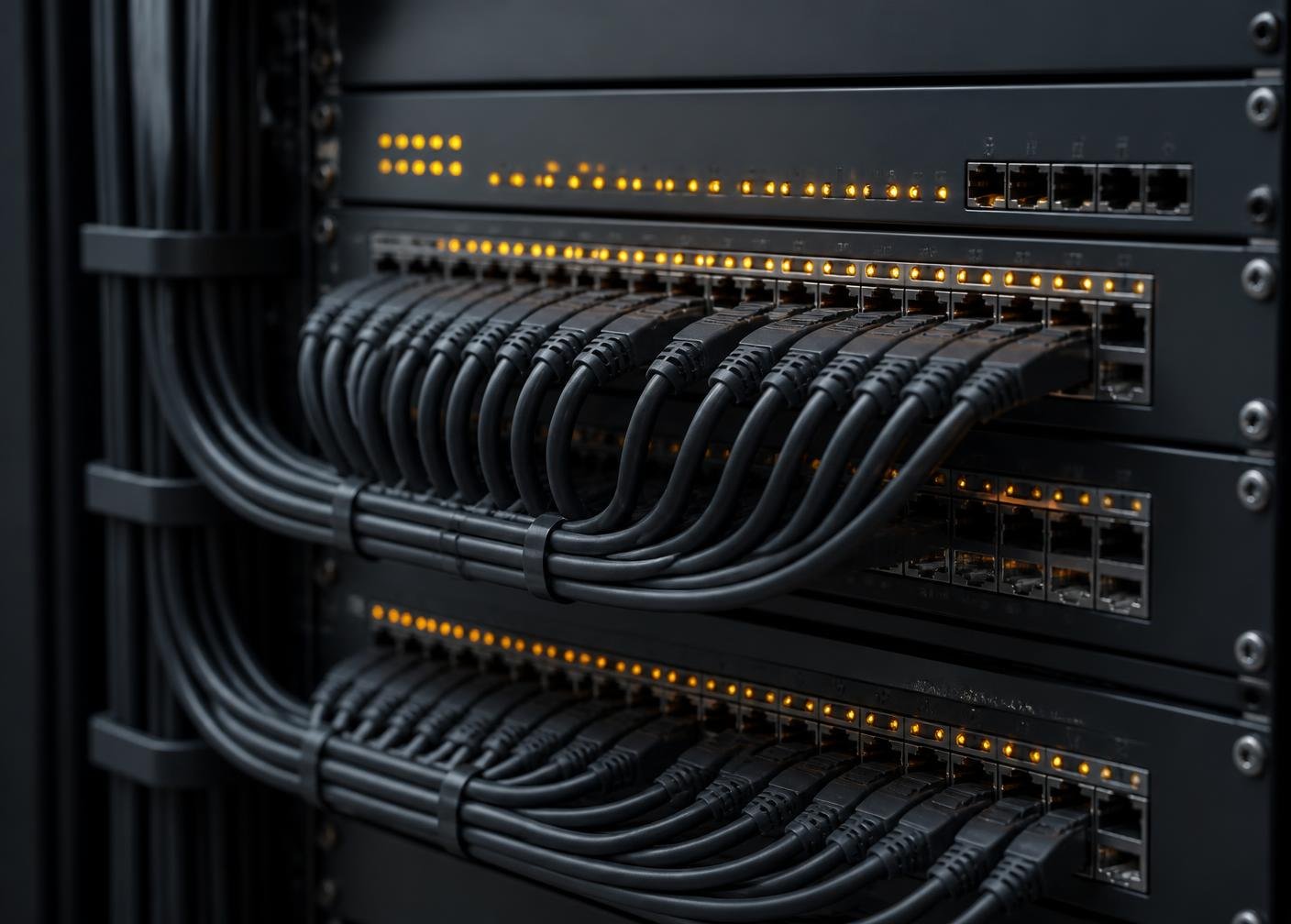
iDeploy engineers reviewing enterprise server and network hardware in a data room

Business Technology Foundation™

We build the IT infrastructure that regulated financial institutions can depend on.

We help banks, microfinance institutions, insurers, SACCOS, and other regulated organizations reduce infrastructure risk, prevent costly disruption, and strengthen operational resilience. We modernize and secure the networks, servers, identity, virtualization, backup, and business continuity systems behind your operations and document them so your IT environment is resilient, supportable, and ready for management, auditors, and regulators.

Have a specific IT infrastructure problem?

  • Customersdepend on availability
  • Core systemsdepend on servers
  • Serversdepend on networks
  • Member datadepends on storage
  • Recoverydepends on tested backup
  • Compliancedepends on all of it

The framework

Every institution runs on six technology pillars

When one pillar is weak, the institution is exposed regardless of how strong the others are — operationally, and under supervision. The Business Technology Foundation™ is how we assess, design, strengthen, and evidence all six.

Specialist capability

Still running Windows Server 2008 or 2012?

Legacy identity infrastructure keeps working right up until the day it does not. We migrate Active Directory, DNS, DHCP, and Group Policy onto supported, redundant platforms — without changing how employees log in.

Windows Server & Active Directory Modernization
Network engineer patching fiber optic cables into a structured cabling panel
  • Active Directory migration with zero authentication downtime
  • Domain Controller upgrades and role transfer
  • DNS, DHCP, and Group Policy migration
  • Stale account and policy cleanup, fully documented

Specialist capability

Running legacy VoIP systems on unsupported platforms?

Outdated VoIP/PBX platforms put your communication, security, and business continuity at risk. We help financial institutions migrate from legacy, hardware-bound systems to modern, virtualized, and supported VoIP platforms — with zero disruption to your operations.

VoIP Migration & Modernization
Enterprise IP desk phone in a network operations room with server racks behind
  • Assessment of current VoIP/PBX systems and risk analysis
  • Migration from legacy (CentOS 7, hardware appliances) to modern, supported VoIP platforms
  • Deployment on VMware, Proxmox, or other virtualized environments
  • SIP trunking, security hardening, and fraud prevention
  • Call recording, IVR, auto attendant, and extension management
  • Monitoring, backups, and disaster recovery for VoIP systems

Where institutions are exposed

You cannot evidence what you have never assessed

These are the gaps we find most often in Tanzanian financial institutions. Most have several, and most did not know until someone looked — us now, or a supervisor later.

C

Compliance risks

What a supervisor can find, and what it costs to close.

Controls you cannot evidence
The policy exists. The segmentation, logging, or access review behind it cannot be produced on the day it is asked for.
Cloud adopted without due diligence
Business units subscribe to services that hold institutional data, outside the review the guidelines require.
Untested recovery objectives
A stated recovery time nobody has ever measured is a commitment, not a capability.
R

Reliability risks

What stops the business when it fails.

Single points of failure
One server, one firewall, one switch, one storage system. A system that works today can still be a business risk tomorrow.
Aging infrastructure
Legacy Windows Server environments and out-of-warranty hardware kept running because migration feels risky.
Backups that have never been restored
A backup nobody has tested is an assumption. Recovery time is unknown until the day it matters.
No monitoring or early warning
The first alert is a user complaint. A full disk, a failed drive, or a failing backup goes unnoticed until operations stop.
S

Security risks

What exposes the business before an incident.

Weak identity and access management
Shared passwords, former employees with active accounts, and no central control over who can reach what.
Flat network design
Guest Wi-Fi and financial systems on the same network. Anything that reaches one device reaches everything.
A false sense of security
"We have never been attacked" is not a control. Security is about reducing risk before disruption, not reacting after it.
G

Growth risks

What limits the business as it scales.

Infrastructure that stopped scaling
Designed for five employees and one server. Now carrying a hundred people, remote work, and cloud applications.
Buying cheap instead of buying right
Consumer-grade hardware looks affordable until you count failures, lost productivity, and short replacement cycles.
Cloud adoption without planning
Migrations made without assessing cost control, dependencies, bandwidth, or data protection.
O

Operations risks

What drains the team every week.

IT teams stuck firefighting
Every hour spent on emergencies is an hour not spent on improvement. The same problems return.
Undocumented infrastructure
Firewall rules, server dependencies, and backup procedures live in one person's memory. Reliable businesses do not run on tribal knowledge.
Vendor dependency
One provider, one technician, one supplier. Your business should control its technology decisions, not be controlled by them.
No lifecycle management
Equipment is replaced when it breaks. Technology should be managed as a business asset, not emergency spending.

How we help

We are measured on business outcomes, not equipment delivered

Reduce downtime

Redundancy, failover, and tested recovery instead of hope.

Evidence compliance

Controls that can be produced on the day an examiner asks.

Strengthen security

Segmentation, least privilege, and attributable access.

Prepare for growth

Capacity and architecture sized for the institution you are becoming.

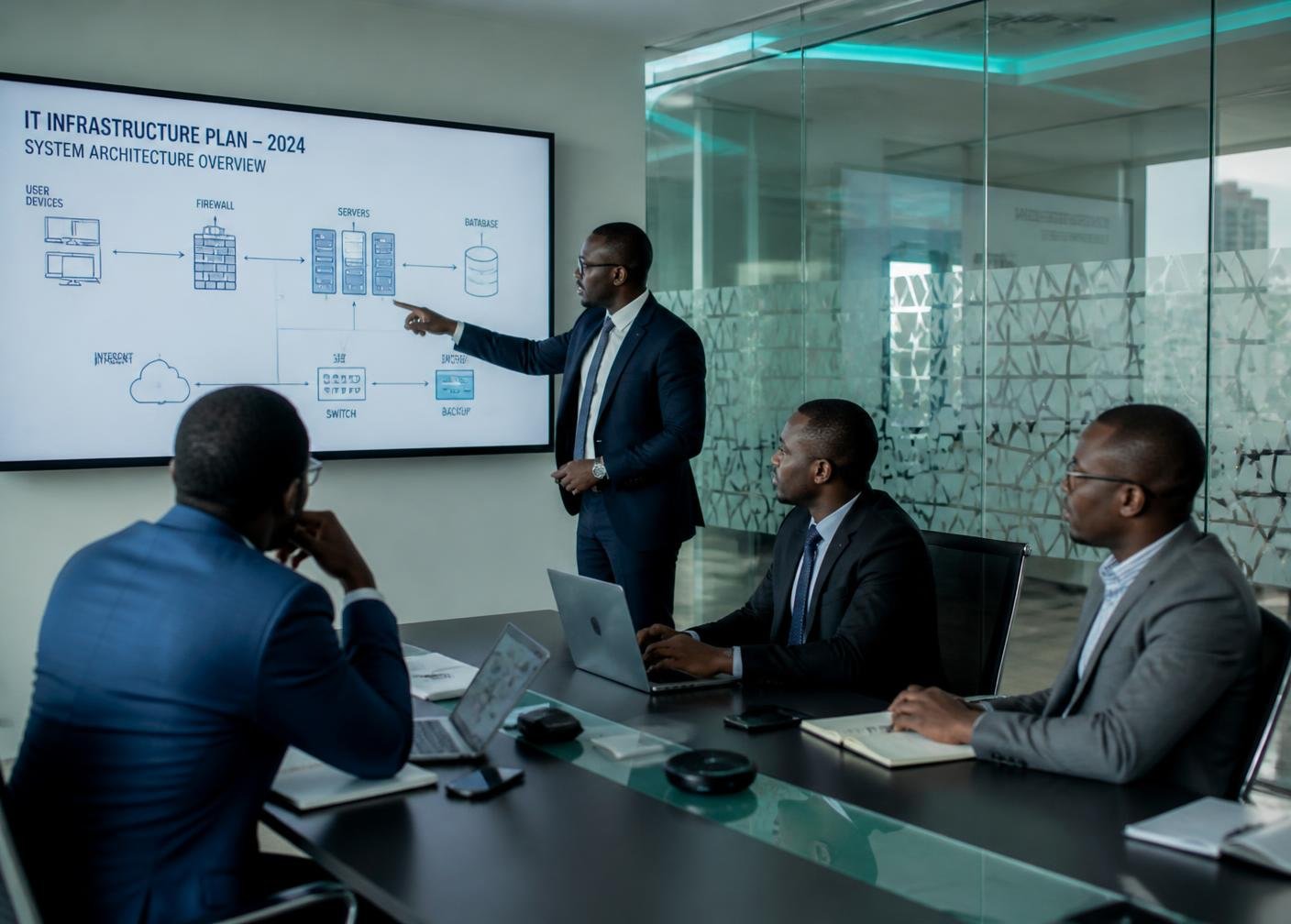
Infrastructure consultant presenting a network architecture diagram to business leaders

Our approach

Six steps, in this order, every time

See the full approach
  1. 01

    Understand

    We start with the business, not the equipment: what you sell, how you operate, and what growth looks like.

  2. 02

    Assess

    We document what exists — systems, dependencies, risks, and lifecycle position — and put numbers to the exposure.

  3. 03

    Design

    We produce an architecture and a phased roadmap with cost and business impact for each phase.

  4. 04

    Implement

    We deliver in planned windows with tested rollback, and we communicate before, during, and after.

  5. 05

    Protect

    We build backup, recovery, segmentation, and access control into the design, not after it.

  6. 06

    Improve

    We monitor, review, and adjust. Infrastructure is managed as an asset with a lifecycle.

iDeploy support specialist monitoring network dashboards from an operations desk
Monitored, documented, and supported after handover.
Enterprise server rack with structured cabling in a climate controlled room
Built with redundancy, tested before it matters.

Case studies

Challenge, solution, business result

Tier 2 Bank

Challenge
Two Windows Server 2012 domain controllers authenticating 240 staff across three branches, both out of support, with no documented Group Policy and no evidence of privileged access review.
Solution
Phased Active Directory migration to a supported, redundant pair of controllers with DNS and DHCP transfer, policy rationalization, privileged access attribution, and full documentation.
Result
Zero authentication downtime during migration, 61 stale accounts removed, and an identity platform that can be evidenced to an examiner.


Microfinance / SACCO

Challenge
One flat network carrying the core member-management system, teller workstations, CCTV, and staff Wi-Fi, with a backup nobody had ever restored.
Solution
Network segmentation with rebuilt firewall policy, role-scoped remote access, and a redesigned backup with documented recovery objectives and a witnessed restore test.
Result
The core system isolated from general traffic, and a measured 40-minute restore replacing an untested assumption.

Logistics

Challenge
A single physical server carrying the warehouse, dispatch, and accounting systems. Two unplanned outages in one quarter, each stopping dispatch for a full day.
Solution
Virtualized platform across two hosts with high availability, shared storage, and offsite backup with tested restore procedures.
Result
Restore time reduced from an unknown value to a verified 40 minutes, and no dispatch-stopping outage since deployment.

Healthcare

Challenge
One flat network shared by patient records, clinical devices, staff laptops, and guest Wi-Fi, with remote access granted broadly.
Solution
Network redesign with VLAN segmentation, a rebuilt firewall policy, role-based remote access, and monitoring with alerting.
Result
Clinical systems isolated from general and guest traffic, remote access scoped by role, and issues detected before staff report them.

Infrastructure Insights

Written for the people who sign off the budget

All articles

Next step

Book a BoT Cybersecurity & Compliance Readiness Assessment

A structured review of your network, servers, identity, backup, and cloud exposure against the Bank of Tanzania guidelines. You receive a written report: what you have, where the gaps are, and what to close first.